Syeus Mottel Media Archive
The historical photographs are a starting point for the research.

mmottel@gmail.com
instagram: @talibamnyc
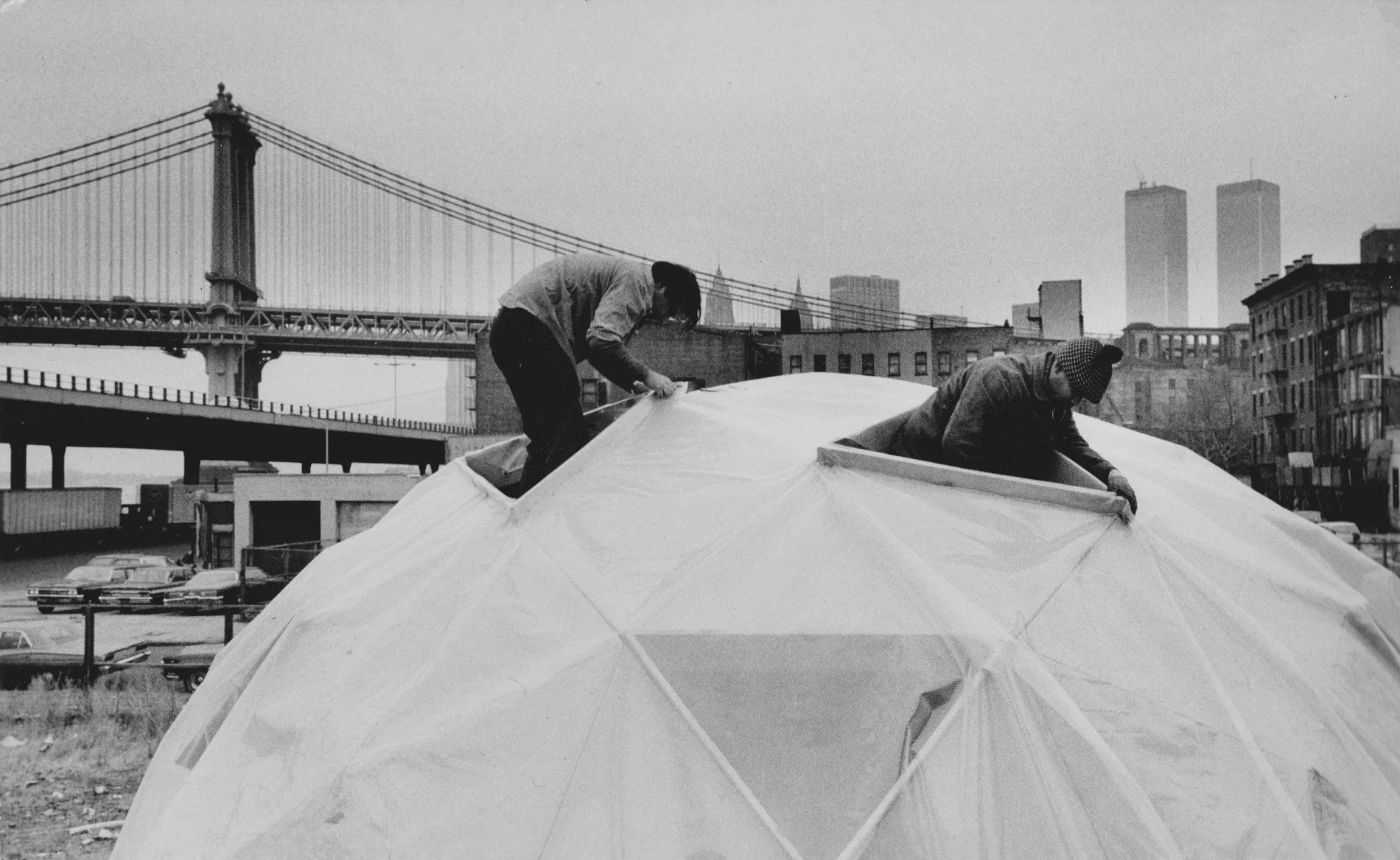
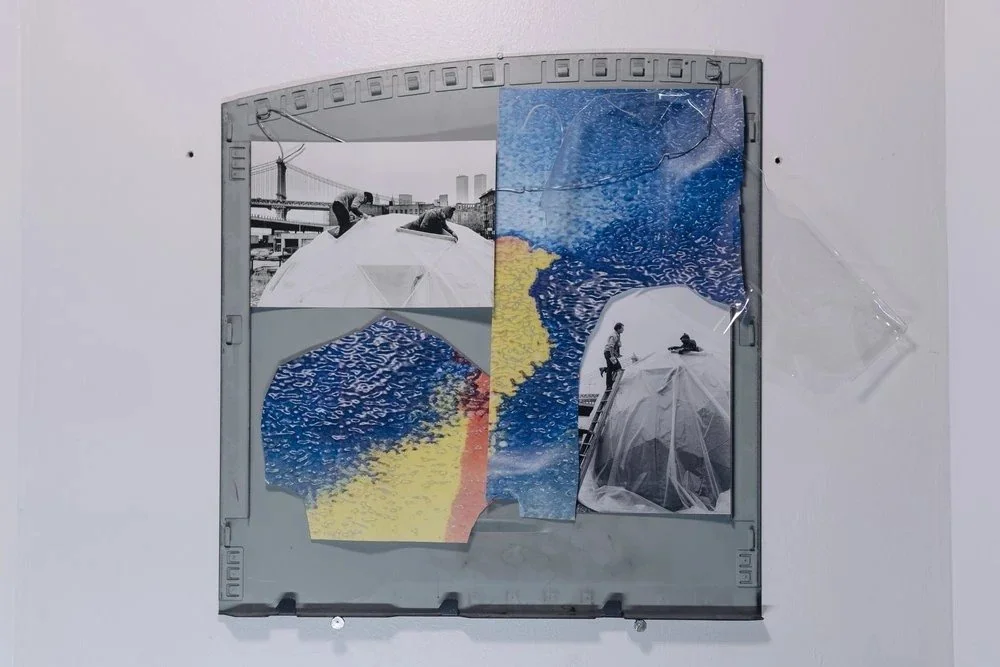
The archive provides a template for new activity. My father, Syeus Mottel, photographed CHARAS building geodesic domes on the Lower East Side in 1972 and 1973. I have been working with those photographs, the people in them, and the question of what we can do with this history now.
A photograph becomes an assemblage. The dome becomes a place for a band, a film, a conversation. Research goes back into circulation. This work moves between CHARAS’s cultural history and my own installations, documentary films, workshops and performances.
CHARAS was a Puerto Rican-led community organization making its own resources in a city withdrawing support from the neighborhood. The dome brought geometry, collective study and construction onto vacant land. Michael Ben-Eli and Buckminster Fuller enter this story through the work of the people building it.
The dome is the entry point. The history continues through housing, gardens, youth work, film, music, theater and the rehearsal rooms of CHARAS / El Bohío. These are cultural practices that made room for other people to work. My research follows that infrastructure and asks how it gets left out of the history of experimental art.
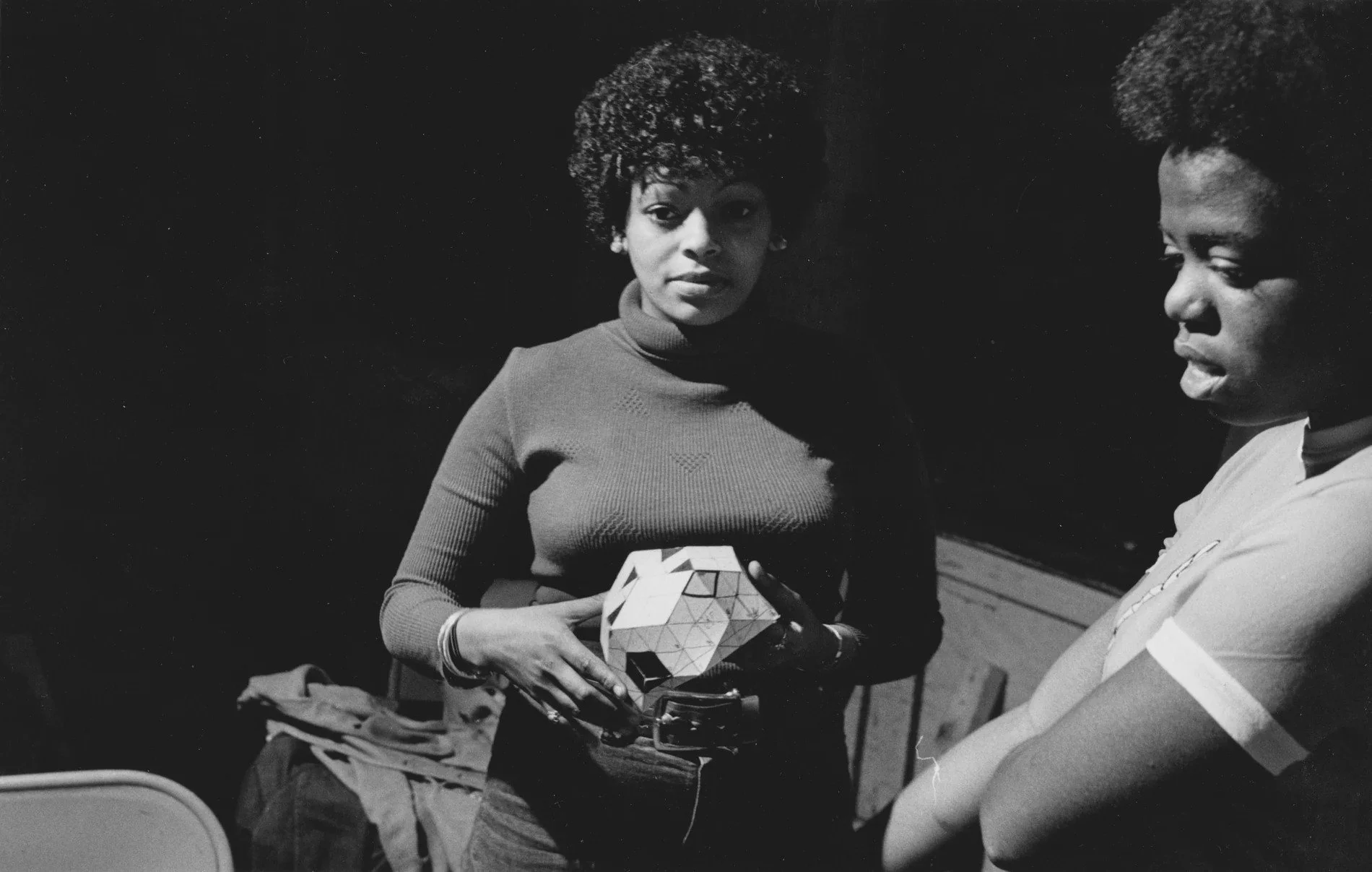
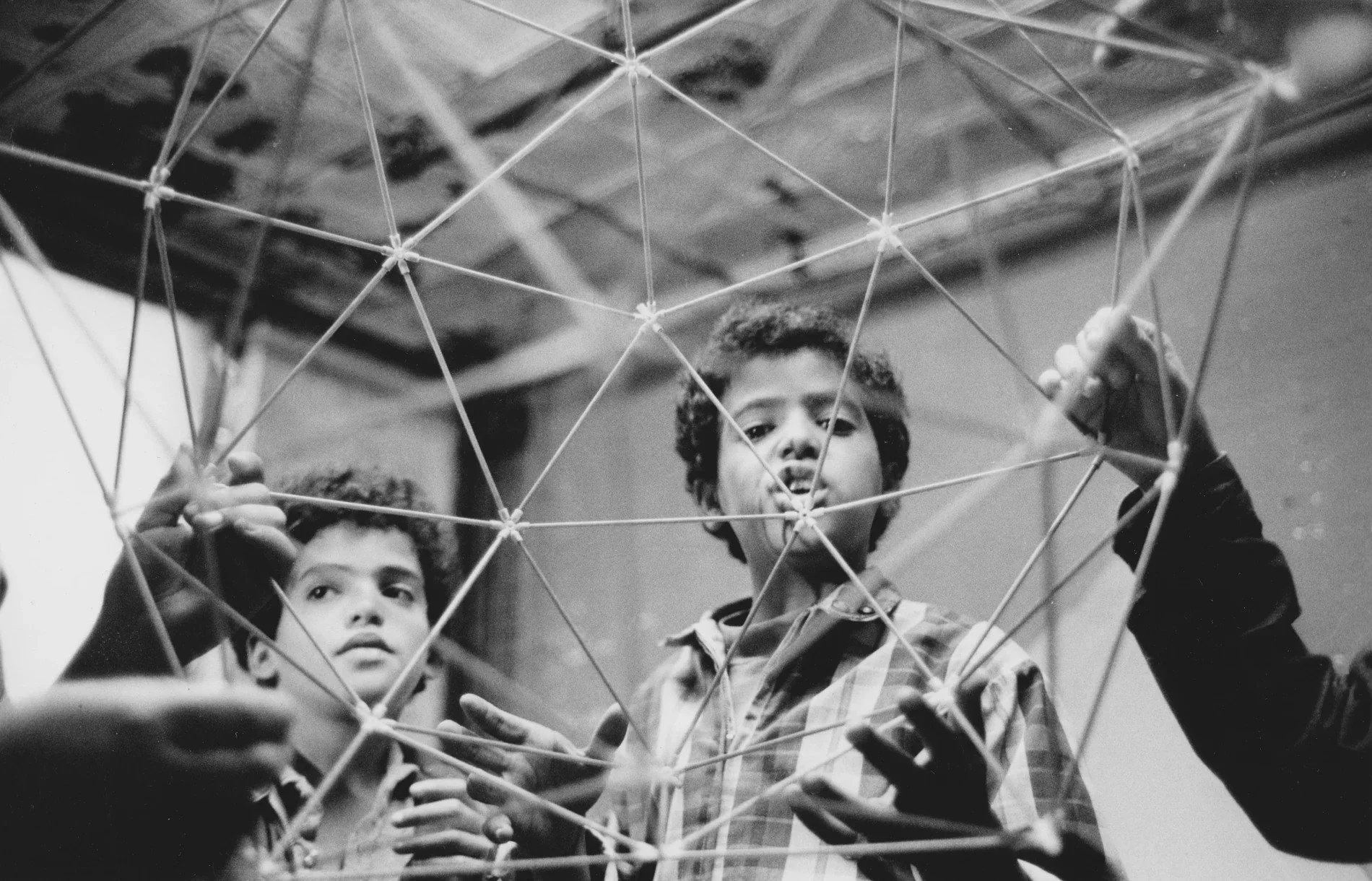
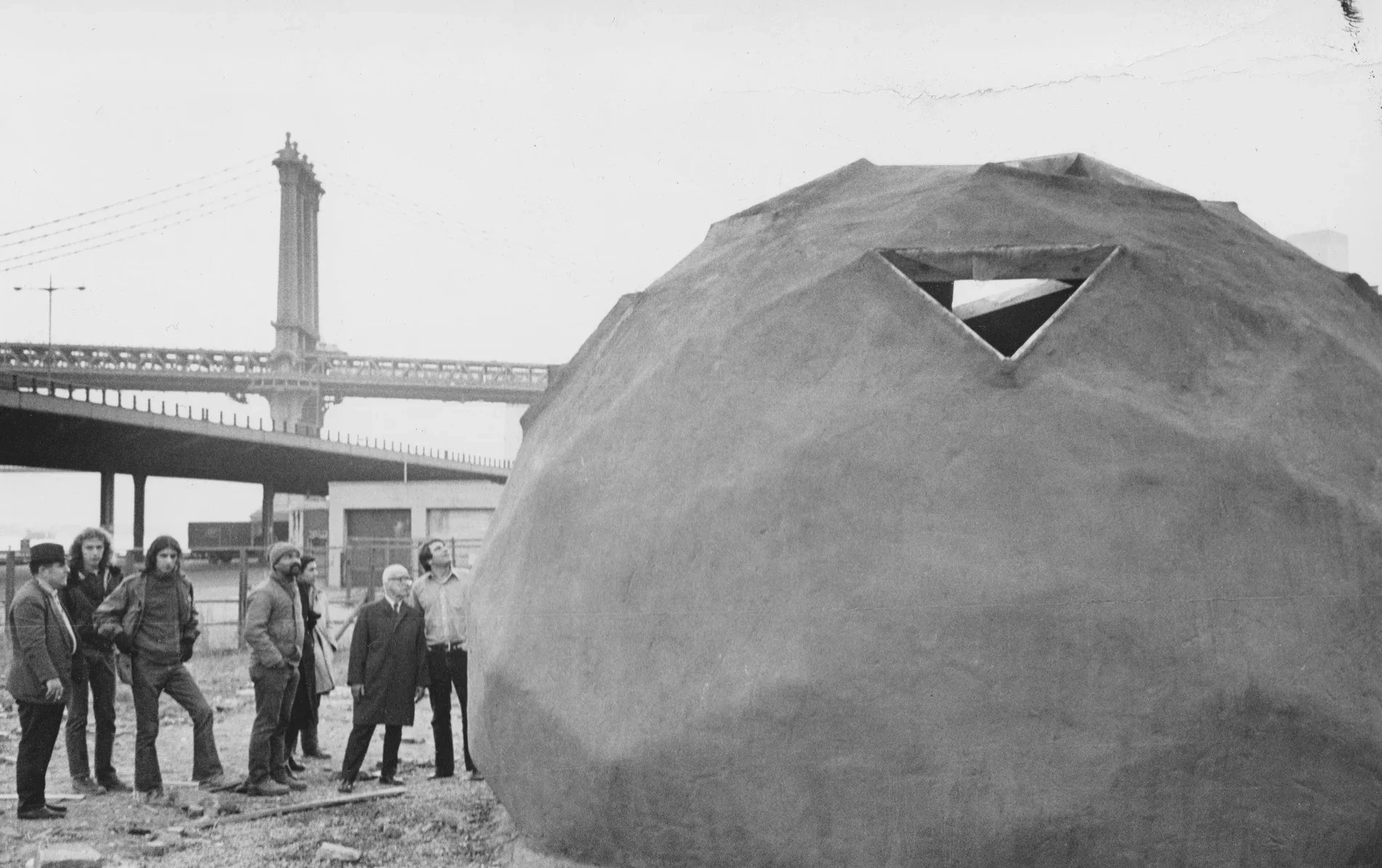
Syeus’s CHARAS: The Improbable Dome Builders was first published in 1973. The Song Cave and Pioneer Works brought it back into print in 2017. Photographs sit with interviews and the account of how the group learned to build together.
At the December 10, 2017 launch at Pioneer Works, Chino Garcia and Michael Ben-Eli spoke with Nandini Bagchee. I presented my documentary, CHARAS: The Improbable Dome Builders (Future in Action). The book, the film and the people speaking in the room put the archive back into a public conversation.
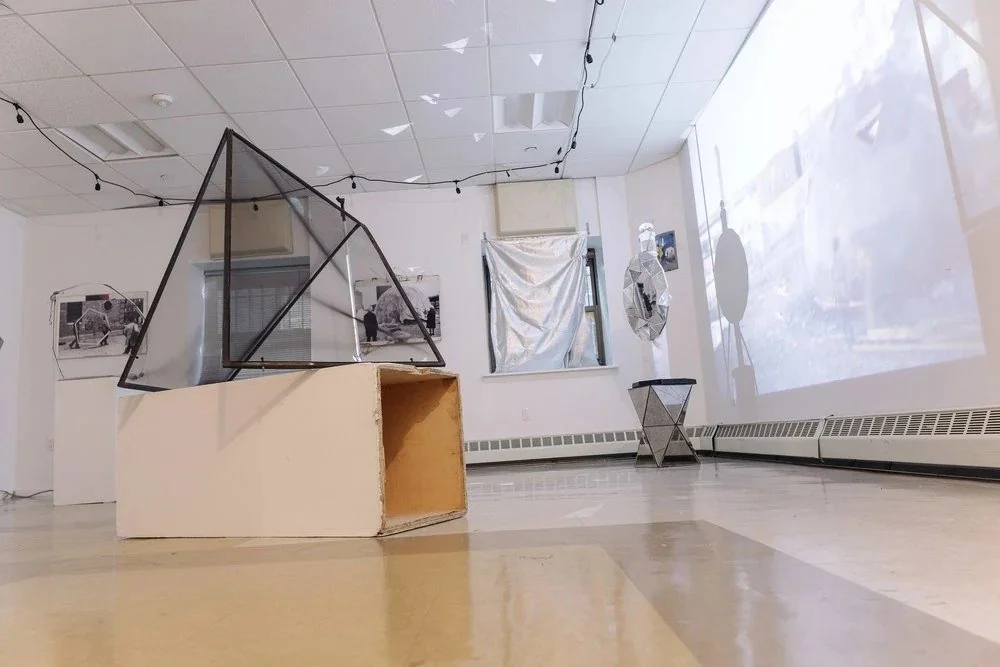
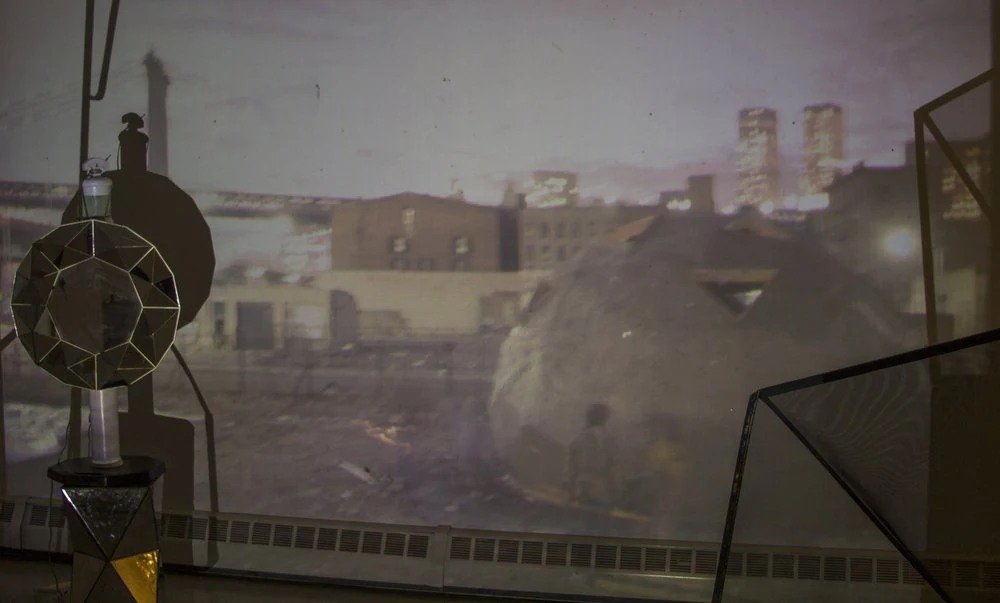
Social Imagination brought Syeus’s photographs into the gallery as material for new work. I built assemblages around the images, projected a digitally reconstructed dome onto the original site, and sent an analog oscillator through a vibrating aluminum sheet. The FDR overpass entered the room as sound.
The project connected Loisaida Center and La Plaza Cultural de Armando Perez. A newly built dome became a venue for performance, film and hanging out. The exhibition and my MFA thesis developed together, with conversations with Chino Garcia and Sal Becker returning the photographs to the people whose work they document.
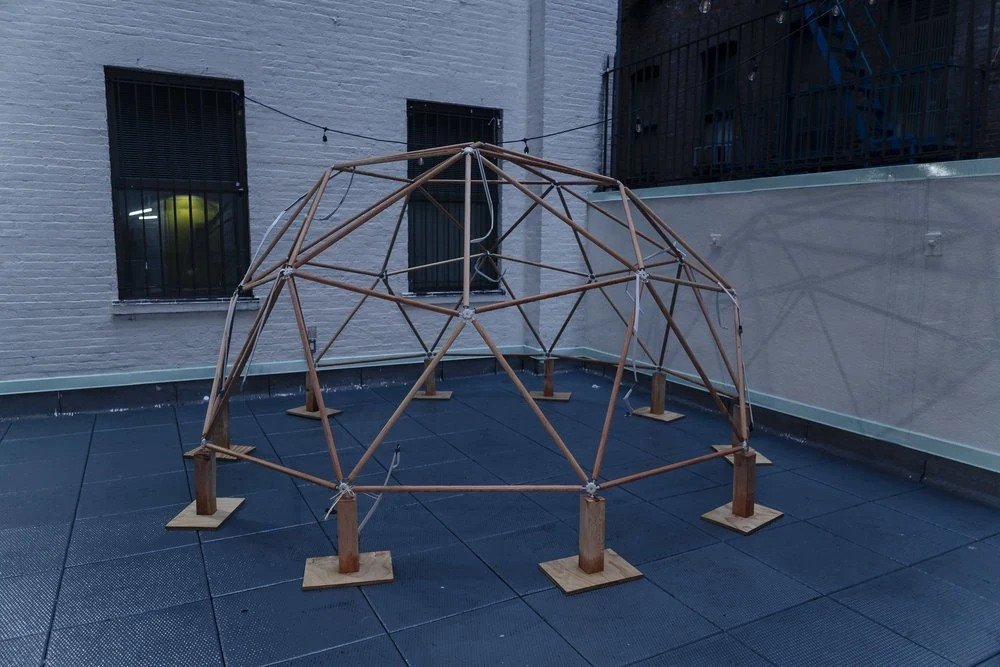
The Geodesic Sonic Receptacle Sound System carries a portable concert venue into the neighborhood. Speakers attach to the dome; distance and interrupted signals become part of the composition. Other artists can use the structure and decide what happens inside it.
Question Design Dome asks how an artwork changes the way people operate in public space. Geodesic Linguix, with Edwin Torres at the Poetry Project, brings another vocabulary into the work: poetry, voice and sound.
The dome work continued at Salisbury University Art Galleries in 2020, through installation, collective building and live performance. Making the Geodesic Scene brings the historical research into the act of making a space together.
HABITAT ran February 17–March 28 at SU Art Galleries Downtown, with Amber Eve Anderson, Raghvi Bhatia, Garret Kane, Carlie Trosclair and me. My dome-building workshop and artist lecture took place February 13. The February 15 performance was part of Seeing Sound #10, listed by Salisbury as Image is Seed.
At Rockaway Film Festival’s Science Fictions and the Puerto Rican Future programme, I assembled the dome before the films. CHARAS’s experiments with space entered a programme about colonialism, ecological crisis and the futures being imagined by Puerto Rican artists.
This five-minute 2023 film cut puts Syeus’s photographs into motion through processed images and sound. The documents keep moving between the book, the screen and the space where people gather.
With Natalia Nakazawa and dre jácome, in a conversation moderated by Meghana Karnik, I brought the CHARAS research into a discussion of social architecture, oral history and community organizing. The question continues across these practices: how do we make the spaces and tell the stories ourselves?
I am developing a new book, CHARAS: The Future in Action — Domes, El Bohío, and the Making of a Nuyorican New York. The photographs open onto a larger history of community-controlled space: who maintained it, who rehearsed there, who could afford to stay, and who gets remembered as a cultural producer.
The manuscript brings the photographic archive into conversation with my research and recorded conversations with Chino Garcia, Sal Becker, William Parker, John Holmstrom and others. Preserving the material means keeping those relationships and disagreements available for the next person who wants to make something happen.
The historical photographs are a starting point for the research.
The research develops into portable performance architecture.
Temporary architecture and collective building also appear in PAG; the projects have distinct histories.
Optipus — In and Around the Dome. June 9, 2018 · Loisaida Center, NYC. Performance documentation from Matthew Mottel’s video archive.
Matthew Mottel & Edwin Torres — Geodesic Linguix. 2019 · The Poetry Project at St. Mark’s Church. Performance documentation from Matthew Mottel’s video archive.
CHARAS — 2023 film cut. Film by Matthew Mottel; archival photographs by Syeus Mottel. Complete 5:11 cut from the artist’s Rockaway 2023 film archive.